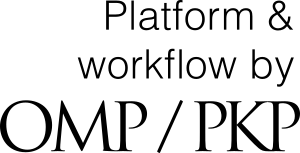
Language (De)standardisation in Late Modern Europe: Experimental Studies
Keywords:
standard languages, ideology, destandardisation, standardisation, Europe, standardness, variabilitySynopsis
This book investigates the ideological dimensions of the various (de)standardisation processes conspicuously present in contemporary Europe. It is a well-documented fact (for overviews, see Deumert and Vandenbussche 2003; Kristi-ansen and Coupland 2011) that all European standard languages are currently undergoing extensions which are considered a threat to the uniformity in their use - which is one of the commonly accepted criteria for standardness (see for instance Auer 2005, 2011). Professional linguists are increasingly attesting sys-tematic variability - in the form of, for instance, regional or social accents - in standard speech produced by the ‘best speakers’ (such as news anchors of official broadcasting institutions) in the most formal contexts. But the fact that vari-eties which are supposed to be uniform are becoming more variable also excites concern and controversy among non-professional language users.
Chapters
-
On the need to access deep evaluations when searching for the motor of standard language change
-
Language attitudes in south-west Germany
-
Authority and innovation in language variation: Teenagers’ perceptions of variation in spoken Irish
-
Overt and covert evaluation of language varieties in the Lithuanian speech community
-
Driving forces in language change - in the Norwegian perspective
-
The impact of dialect loss on the acceptance of Tussentaal: the special case of West-Flanders in Belgium
-
Can speaker evaluation return private attitudes towards stigmatised varieties? Evidence from emergent standardisation in Belgian Dutch
-
Teachers’ Dutch in Flanders: The last guardians of the standard?
-
Language attitudes in the Republika Srpska: Eliciting some truth from behind the propaganda
-
The measurement of ‘language attitudes’ - a reappraisal from a constructionist perspective
-
On matching speaker (dis)guises - revisiting a methodological tradition
-
Approaches to the study of Language Regard
-
Connecting attitudes and language behavior via implicit sociolinguistic cognition
-
Evaluation of different registers in Icelandic written media
-
Controlled manipulation of intonational differenceAn experimental study of intonation patterns as the basis for language-ideological constructs of geographical provenance and linguistic standardness in young Danes
-
Language ideology and the notion of construct resources: a case study of modern RP
References
Downloads
- 01 On the need to access deep evaluations.pdf 01 On the need to access deep evaluations.pdf
- 02 Language attitudes in south-west Germany.pdf 02 Language attitudes in south-west Germany.pdf
- 03 Authority and innovation in language variation.pdf 03 Authority and innovation in language variation.pdf
- 04 Overt and covert evaluation of language varieties.pdf 04 Overt and covert evaluation of language varieties.pdf
- 05 Driving forces in language change - in the Norwegian perspective.pdf 05 Driving forces in language change - in the Norwegian perspective.pdf
- 06 The impact of dialect loss on the acceptance of Tussentaal.pdf 06 The impact of dialect loss on the acceptance of Tussentaal.pdf
- 07 Can speaker evaluation return private attitudes towards stigmatised varieties.pdf 07 Can speaker evaluation return private attitudes towards stigmatised varieties.pdf
- 08 Teachers' Dutch in Flanders.pdf 08 Teachers' Dutch in Flanders.pdf
- 09 Language attitudes in the Republika Srpska.pdf 09 Language attitudes in the Republika Srpska.pdf
- 10 The measurement of ‘language attitudes’.pdf 10 The measurement of ‘language attitudes’.pdf
- 11 On matching speaker (dis)guises.pdf 11 On matching speaker (dis)guises.pdf
- 12 Approaches to the study of Language Regard.pdf 12 Approaches to the study of Language Regard.pdf
- 13 Connecting attitudes and language behavior via implicit sociolinguistic cognition.pdf 13 Connecting attitudes and language behavior via implicit sociolinguistic cognition.pdf
- 14 Evaluation of different registers in Icelandic written media.pdf 14 Evaluation of different registers in Icelandic written media.pdf
- 15 Controlled manipulation of intonational difference.pdf 15 Controlled manipulation of intonational difference.pdf
- 16 Language ideology and the notion of construct resources.pdf 16 Language ideology and the notion of construct resources.pdf
Published
Categories
License

This work is licensed under a Creative Commons Attribution-ShareAlike 4.0 International License.